Mother Wars

The Children's Book from 'The Babadook' Will Terrify You in the Real World  | IndieWire

The first Twitter Mother War that I remember was over a 2018 column from Connor Kilpatrick in Jacobin entitled, “It’s OK to Have Kids.” More than anything else on rereading, the article does not make very much sense. It aims its critique at a smattering of liberal articles that either discourage childbearing or offer an account of those who choose not to have children for a variety of reasons: for the environment, for their marriage, for their career. The coherence of these articles as a single ideology is debatable; certainly Kilpatrick’s criticisms of them misses the mark. In his rather milquetoast recommendation to have children, Kilpatrick explains that “What the professional classes will never understand. . . is just how rewarding child-rearing is for those who are under no delusions that capitalism will ever provide validation.” Unfortunately for us all, you cannot have children outside of capitalism. But this claim becomes more perplexing at the end when he writes “Right now, however, only the affluent can truly have it all,” a statement that sounds like the professional classes do understand the validation of having children. While ostensibly an article about embracing parenthood despite climate change and material pressures, Kilpatrick is only writing about mothers. The word father only appears once and the word parenthood is only applied to mothers. After the piece appeared, Twitter erupted. As online discourse tends to do, the question that was lifted from the piece transformed into its most blunt, useless form: children, good or bad?

We have had this conversation several times over the years on Twitter and during the pandemic year we have had it almost once a month (although rarely with as much furor as most recently). On Mother’s Day Weekend, the next Mother War was set off by New York Times columnist Elizabeth Bruenig’s (much better) piece on being a young mother. Titled “I Became a Mother at 25, and I’m Not Sorry I Didn’t Wait,” the article anticipates many of the critiques thrown at it, including pointing out that there are good reasons not to have children. She also has some self awareness to set her case-making against the backdrop of the elite private school parents who all had children much later in life. And yet the piece still rankles for a few reasons. Setting aside that Bruenig has shown herself to be the conservative wing of the socialist movement by being both anti-abortion and writing articles in The American Conservative (I will come back to this), Bruenig does admit that she is making “the case for early parenthood” implying that there is a strong normative takeaway from the article; this opinion piece is not a personal essay or even a defense, but a case that early parenting is toward some good. While listing lots of historical data about the age of motherhood going up, Bruenig fails to mention that the average age of a first-time American mother is 26 years old and the biological clock (as Moira Weigel has written about, this is a specifically antifeminist construction) continues to rush us towards motherhood and label our post-35 pregnancies “geriatric.”

Thus Bruenig repeats a phenomenon that happens on both the left and the right: one that I call “false hegemonies.” While closely linked to feelings of victimization on the right, the left’s version is more insidious. The idea of cultural hegemony was coined by Italian communist Antonio Gramsci to describe the domination of the ruling class over cultural norms. My intervention here is that limited milieus are either consciously or unconsciously framed as hegemonic. Here, I’d argue Bruenig’s article is a prime example. Liberal feminism, which according to both Kilpatrick and Bruenig is encouraging and enforcing our most intimate practices of reproduction, would be the false hegemony. In both their accounts, there is a certain paranoia that lean-in feminism is dragging women farther away from motherhood, looking at young mothers’ dismissively in Tory Burch flats. Certainly, liberal feminism is *a* bourgeois cultural ideology, but it is far from hegemonic. It is a misdiagnosis of the times to think that it is. Abortion rights, for almost fifty years the touchstone cause of liberal feminists, face their biggest rollbacks in years on both the state and federal level. Hillary Clinton’s campaign failed, Betsy Devos’s tenure saw Title IX ripped apart, and the pandemic has made childcare a trial for even the wealthiest families. Cultural hegemony is not formed by a single appearance on Broad City but in a collection of norms that shape our culture. Liberal feminism may be a cultural regime that has contended in its own War of Position, but the constraints on culture itself are not feminist in any sense. The average mother is not waiting until 35 to have children so she can be an executive or ceramicist and the average mother still does more than her share of childcare. Liberal feminism lost its war when Sheryl Sandberg showed up at Trump’s door.

***

This is not all to say that liberal feminists do not pose a political problem. Quickly after Bruenig’s piece went up, a number of prominent mainstream feminists voiced criticisms of it. Blogger Amanda Marcotte called it “naked pandering to the fantasies of pathetic men,” while Jude Doyle wrote, “The greatest trick the Devil ever pulled was convincing this woman it was a tremendous personal achievement to be repeatedly knocked up by an Internet troll she met in high school.” Both of these people are famous for being feminists on the internet, but both made inescapably sexist statements, for reasons I shouldn’t have to explain but will. Marcotte’s is both misogynistic and wrong; young motherhood is a fantasy for women as well and while I wouldn’t hazard too strong a guess of Bruenig’s motivations, but her reply guys would not be my first choice. Doyle’s is deeply belittling, giving some unfortunate credence to recuperations of ecstatic parenthood .

Anticapitalist feminists of all stripes may have felt a familiar feeling watching this discussion unfold, as it retread old wounds from the 2016 primary. The inarguably high-profile and self-identified socialist Bruenig has made a regressive argument for young motherhood and two liberal feminists respond with critique that is more offensive than its object. Suddenly it becomes much harder to make a legitimate criticism of a very criticize-able piece when the loudest voices are both sexist and claiming feminism for themselves. The piece itself is an op-ed in the US paper of record from a socialist columnist; its content should be taken seriously and socialists in particular should be pushing back on things they don’t want to define the movement to a large audience. Yet it’s very hard to do that without concern that in the 250 character tweet you may be seen as joining the chorus with Jude and Amanda, or by staying silent you condone the other side of the discourse. And it’s the other side of the discourse that really troubles me. 

***

Previously I mentioned Bruenig’s broader questionable politics, but I think it is time to return to them. In her piece in The American Conservative, she warmly reviews Eve Tushnet’s Gay and Catholic, which endorses a form of pro-gay celibacy. Surely Tushnet is welcome to do what she wants (or does not want) in her bedroom, but it is hard to imagine why Bruenig would write this review for this audience, except that she herself thinks conservatives should continue to hate the sin as they love the sinner. Bruenig represents a not small portion of the left that wants economic conditions to change but has deep ties to traditional values. For these socially conservative, fiscally socialist Twitter denizens and DSA organizers, the family, sex, and gender are understood to be natural. These readers swear that they only see a beautiful moment of Bruenig looking into her daughter’s face, and not the assumptions and desires beneath it. Conservative feminist Caitlin Flanagan rose to her defense, and many socialists did as well. They simply could not understand why Twitter is in a huff because a mother loves her children! 

This reading fundamentally misunderstands not just how we can build a more emancipatory movement but also how media and public opinion play roles in current policy development. Moreover, the claim that it is impossible to tell how a socialist could read this piece and have political objections to it is frankly ignorant of socialist histories. Family abolition and critiques of maternalist policies have long been part of the left. In The Communist Manifesto, Marx and Engels write, “Abolition of the family!” Both Marx and Engels knew that the destruction of the bourgeois family structure was an important step in unmaking capitalism. Bolshevik Alexandra Kollantai wrote decades later, “The workers’ state needs new relations between the sexes, just as the narrow and exclusive affection of the mother for her own children must expand until it extends to all the children of the great, proletarian family.” In the 1970s, both radical and Marxist feminists took up the beginning of feminist critique from Marx and Engels and blew it up. Not only was the family unit as a legal and economic entity under fire, motherhood as a good in itself was. Most famously in her book The Dialectic of Sex, Shulamith Firestone dreams of artificial wombs so child-bearing people will be spared “childbirth [which] is at best necessary and tolerable. It is not fun.(Like shitting a pumpkin, a friend of mine told me when I inquired about the Great-Experience-You-Are-Missing.)” She hopes for new kinds of living situations where childcare is shared among adults of all ages and genders as well as children.  

Importantly, as white feminists in ht 1970s centered gender oppression in the family, Hazel V. Carby makes an crucial intervention in their account. In 1982, Carby writes, “We [Black feminists] would not wish to deny that the family can be a source of oppression for us but we also wish to examine how the black family has functioned as a prime source of resistance to oppression. We need to recognize that during slavery, periods of colonialism, and under the present authoritarian state, the black family has been a site of political and cultural resistance to racism.” Carby’s point is important and made throughout her essay (“White Women Listen!”) about the need to be attentive to race, class, and gender at once. While the term family abolition sounds absolute, most robust and thoughtful explorations of the idea are filled with contingencies and recognize that kinship organizations have looked distinctive over time and space; some map much closer to the ideals of nurturing that family radicals embrace than the family as it is today. 

In her 2019 book Full Surrogacy Now, scholar Sophie Lewis (full disclosure: I read Carby in a class with Lewis as my teacher) makes the case to disentangle biology from kinship, or as she put it in an article in Salvage, “Momrades against Mothers.” Lewis importantly makes a distinction between mothering, which can be done by anyone, and Mothers, who play a gendered, hierarchical, and isolating role in the household. This nuance is helpful, because while mothering is the kind of emotional glue that holds community together, Mothers have often (though not always) mobilized politically as mothers in some of the most reactionary campaigns, calling on carceral and punitive powers to seek redress for harm. Most recently in her piece “Who Cares?” published in The Baffler, labor journalist Sarah Jaffe writes “heterosexuality was premised on a now-dead work regime”–that of the family wage. But heterosexuality and its attendants (children) are still linked to a still living property regime, where the wealthy not only pay for their children to have the best of everything but also hand over vast sums of money on their death. The family remains as Marx defined it, the “nucleus” (Tucker trans.–it may be better translated as “kernel” from the German) of capitalism. 

Rethinking the family is also a crucial aspect of abolishing the carceral state. In fact, one of the most important books on the subject Killing the Black Body, argues that reproductive rights as conceived of by white feminists in the US are too limited and fail to take into account how Black women’s reproduction has been subject to fraught and violent coercion. In the closing chapter, legal scholar Dorothy Roberts posits a version of positive liberty that allows Black women to mother unaccosted by the state–in fact, aided by the state–in lieu of the idea that abortion access alone equals reproductive justice. Writer Vanessa A. Bee summed up the racial dynamic of pregnancy when she tweeted, “the last thing i’ll say is that pregnant women of color are socially perceived as suspicious at any age in a way that i don’t think comes up much with white women who have children outside of teenagehood. make of that what you will.” Black and Brown parents are subject to scrutiny at any age for having children that stems far beyond Bruenig’s analysis. And something is really broken in the way the state treats all parents; that is clear from Roberts, Lewis, and Jaffe but also Bruenig herself. 

It is Roberts’s idea of reproductive justice, one that is historically rooted in the realities of what parenthood and family has meant for generations, shaking out differently along lines of race, class, and gender, that we should pursue. With it, there is no case for early parenthood, no case for parenthood, and no case against parenthood. It is a recognition that parenthood or its lack is not a “choice” in the sense that those who bear children feel that there are two equally open doors in front of them, it’s formed by cultural norms, material concerns, and physical violence. Bruenig recognizes these first two, but many times her defenders do not. There is a sense from socialists that something about family abolition is simply “icky” or that these Twitter flame wars are because no one has thought about the relationship between individual decisions and structural forces. It reveals a broad left disengagement with any form of feminism that goes beyond social welfare programs built on lines to frantically try to re-form and make the nuclear family hospitable again. Although the nuclear family remains a norm, it is far from totalizing. Two married parents and 2.5 children (a frankly disgusting way to talk about children!) are not the experience of many; it may not be your experience. Part of family abolition is recognizing the ways kinship already threads itself outside the nuclear family. Family abolitionists want to look at that web and expand it, making it stronger and more robust.  We want to unmake motherhood, which can be a place of nurturing, but also one of loneliness and abuse, and make something better in its place. We can do it; we already are.


On Subtweeting

arthurfirst

A few nights ago I read a Facebook post that really annoyed me; it was about a feminist thinker (whom I like) who was interviewed in a publication that I read frequently. The comment about her was disparaging. I did the mental calculus that we often do–was it worth it to carefully read the article and then respectfully explain the error in their thinking to the Facebook friend? I looked at the comments and saw a particularly nasty troll that I had seen go after women online respond emphatically and positively to the post. I decided against debate. I opened a tab and typed in Twitter instead.

Subtweeting is seductive. Not only do I get to say my (always right, by default) opinion online, every fav is a sulfurous little fire-work going off in my brain. By the end of a night of subtweeting, I not only have taken a stab at my never-to-be interlocutor, but 111, 354, or 4 other people have rallied by my side to say you’re right in a debate the context of which they could not possibly know. The first time I heard of subtweeting, I asked my very-online boyfriend at the time if I could subtweet my mom. “Is she on Twitter?” he asked? “Nope, she isn’t online at all.” “Then that’s not subtweeting that’s just saying something weird about your mom online.” The whole point of subtweeting is then the frisson I feel at the idea that my jibe just might be seen by its object. My object–a bad organizer, a reporter, an ex, a friend–might find my cutting 240-character quip and feel their error. And they’ll see those 111, 354, or 4 people agree with me about them, even if those followers faving don’t actually agree. 

***

I had an ex who really went off the rails, frighteningly so, after we broke up. Although I had blocked him and locked my social media accounts, he used friends’ accounts to look at my tweets. A mutual acquaintance described him quoting a tweet of mine with a snootful of coke, poised over a powdery bathroom sink. The tweet was a subtweet: “Never trust a young man who quotes Laura Kipnis.” An assumed slight to him since he, in fact, lamented the so-called sex panic of feminism before he was even a subject of it. But the tweet wasn’t even about him.

***

Besides the electric feel of the subtweet, there are twin political phenomena that buoy its popularity. The first is the idea that to criticize is a political project in itself, regardless of result. This deep-searching for a problematic quality in any given text, movie, identity, personage is a warped sense of critical theory or critical practice. Critical theory thrives on specifics: the historical, the personal, the geographical. Perhaps this idea is the one good thing postmodern theory can offer. The problematic subtweet–the one that tries to articulate it–almost always drains it of its specificity. These tweets are framed as didactic, as being helpful, but they are not. They can’t possibly be because they lack the specificity needed to make them real often. The art of the subtweet refrains from naming names, the vaguer the better. The subtweet that points out something problematic cannot be an instructive moment, because it does not make the clear connection from object to lesson, and because its audience can so easily and grossly misinterpret its origin. The entire subtweet dynamic here undermines any critique as political project. The real life equivalent is a surprisingly common trope in organizing spaces. Just because a critique can be made, does not mean it should be made, without a goal, an audience, an effect in mind. The effect must be more than going viral or the jockeying of power among individuals.

The second political impulse is one close to my heart. When I first became a Marxist (or Marxist-y) everything was suddenly political. The movies I watched, the ads, my relationship with my father. It was exhilarating and then exhausting. This piece is not to pinch your lips and tell you to let people like things. Gramsci wouldn’t like that. The impulse I’m describing is when you personally don’t like someone, the new (or naive or cruel or stupid) Marxist will politicize this personal dislike. I don’t mean disliking a person because he’s a landlord (good dislike) or because his gender politics are bad and so he hates his girlfriend (good dislike), I mean because there are some people you simply don’t like and that’s okay. People who have the same or similar politics become politically distinct from you because they are, in fact, kind of an asshole. Or more frequently, they are corny. I am not here to tell you to let people like things; I’m here to tell you to let yourself hate people, no political reasons necessary. A Marxist loves to take their disdain for someone dating their ex or stealing their beer and recast it as class character. And then subtweet about it.

***

The real dynamics of subtweeting became clear to me after I read that Facebook post. I did not address it, but dashed off something that was about its author in a little huff. I posted it. It got many likes. But it was so vaguely worded, I thought about all the people I knew who might sit there and wonder if it was about them. I remember seeing a subtweet that was about my very specific demographic recently from an organizer that I admired. I wondered if she had been thinking about me when she wrote it. I told myself that I didn’t know her well enough for her to hate me, but it wasn’t a comforting thought. I watched the notifications of the likes pop up for my subtweet, piling up on my phone screen like little flashing lozenges, and I sat thinking about the people who were liking it and nervous. Or the people sitting there looking at it and wondering if it was about them, when it wasn’t. I realized I was weighing the tiny toxic explosions of delight at the notifications, and the lie that I told myself that this was a helpful intervention, against the comfort of who knows how many people I admired or liked or even loved who thought that it was about them. The scale could never be close to even, what subtweet was worth that? I deleted it.

***

I love critique; critique of political theory is probably the thing that I am best at in the whole world (much better than, say, writing my own political theory). I think criticism is an indispensible political practice when done right. And that there is nothing worse for a political project than being averse to critique, but to our comrades, that critique (sappily enough) has to come from a place of love or respect. Critiquing out of love always has to come with your name, rooted in your relationship with the object of critique. Show them you love them; use their @.


Gender & Complaint, Pt. 1: Revisiting “The Morning After”

“The word complaint derives from plague, in a vulgar sense, to strike at the breast. A complaint: sick speech. Maybe she is heard as speaking from ill will: not only as being ill, but as spreading infection, as making the whole body ill.”–Sara Ahmed, Living a Feminist Life

c7c9e80c309a6e17daebdf461c4374ec3ee0aa20.jpg

In Kate Zambreno’s Heroines–a feminist-literary-history-slash-memoir-slash-critique-of-marriage (which never quite musters radicalness beyond naming the institution as a stultifying cage)–women complain. Their apartments, bodies, doctors, clothes, spouses, and careers are the subjects of complaint; these grievances are often critical and engaging examinations of what is wrong exactly. Zambreno sets out to investigate the sometimes glamorous, often talented, and unusually troubled “wives of” the so-called Great Men of modernism, while simultaneously examining her own status as a “wife of” an academic. The fairer sex doesn’t fare too well in these marriages–in fact they have many complaints, both in the physical sense, and also, when they’re able to vocalize them, in the vernacular sense. Vivienne Eliot gushes menstrual blood for years, Zelda Fitzgerald’s once charming alcoholism sloshes over into something dark and ugly, Leonard Woolf’s journal is described as a litany of Virginia’s physical and mental complaints, including violence against others. Zambreno herself exists in a sort of depressed fog, snarling against the shackles of a marriage she all but names as oppressive but can’t seem to disentangle herself from. The book for all its flaws has many virtues, but one of the most vital stories it tells is of the gendered vilification of complaint. Zambreno writes, “A definition, I think, of being oppressed, is being forbidden to externalize any anger.” T. S. Eliot, once ready to move on to a younger model, sees to it that his first wife Vivienne dies in asylum. “Hysteria” and “nerves” and all the other pathologizing words we use to describe women’s emotions are on full display. These women are full of complaint–headaches, too-long colds, uncontrollable menses. The psycho and the somatic have slipped together; the pathologization of giving voice to anger and true mental illness have been blurred. They embody the feminization and bourgeoisification of complaint.

Something rankles me about the privileged yet wretched lives of these women; perhaps there is a feeling of the navel-gazing of these distresses, but I also locate it in something ugly and unempathetic within me, some fraught internalized misogyny. Is this the origin of the demonization of complaint? Is it the same misogyny that kept various “wife of”s in comparative disrepute? Whenever I think of picking up a new hobby at the crusty old age of 31, I think of poor Zelda Fitzgerald, a late-in-life inelegant ballerina, she of the slowly pickling insides, demanding small audiences sit in their vicarious embarrassment to watch her dance. No one wants to be Zelda.

***

Speaking of vicarious embarrassment, I was surprised to see Katie Roiphe’s name in the bibliography as I flipped through the final pages of Heroines. Roiphe has recently had something of a resurgence in interest following what has been dubbed for better or worse, “the #MeToo moment.” For millennials, Roiphe might have some vague familiarity as a Slate columnist, but she was far from a household name when she burst onto Twitter like the anti-feminist Kool-Aid man. In what can only be described as showing very questionable ethics, Roiphe was writing an article for Harper’s that revealed the creator of the Shitty Media Men List. When the news broke that she was making moves to do so, she provably lied about her intentions–something that has garnered surprisingly little attention, and did not stop Harper’s from running the piece. Roiphe’s appearance in Heroines was due to a book on literary marriages (sadly worth only a theatrical yawn on closer inspection), but in some ways a more generative foil for understanding why complaint is treated as a menace is her book The Morning After: Sex, Fear, and Feminism, which was published in 1993, when Take Back the Night rallies and sexual harassment trainings were first beginning to erupt on campuses.  

Both the occasionally brilliant Heroines and the flimsy The Morning After help illuminate various mechanisms that cause “complaint” around gender, race, and class to be treated as not simply a companion to the problem but in fact the origin of a problem itself. The problem only exists when someone names it in complaint. If no one names it, the institution, organization, culture, or other body of individuals, does not need to acknowledge it exists. Complaint is usually cast as something simultaneously silly and destructive. The origins of this come in part from the “complaint” as a feminized vice, something that comes through again and again in Zambreno’s brief vignettes on moments in her subjects’ lives. Whereas in Zambreno’s book we spend time with the complainers, Roiphe’s book shows a great deal about how the logic of anti-complaint works.

While Roiphe’s book is easy to read (oh, what a good editor and some clarity of thought can do), it so often fails on its own logic in the most self-aggrandizing ways that the feminist reader might feel a frisson of excitement somewhere between schadenfreude and a shared shame. Roiphe tries to address various separate threads of feminism–from sexual assault awareness to sexual harassment to anti-pornography feminism–under one large umbrella. Picking up the book, I was sure I would see the normal lines about miscommunication, the chilling of real experience, and the inclusion of date-rape as rape as a denial of feminist agency. Some of these ideas are certainly includedm but the claims are more confused than the standard concern-troll response to what has unfortunately been called another “sex panic.”

Again and again throughout the slim volume (you can read it in one distressing night), Roiphe’s arguments range from thin to self-nullifying. In the introduction to the paperback, she bemoans that people have accused her of being privileged with the usual attendant worries of valuing experience too much, but very quickly in the body of the book, she’s flinging the same sloppy privilege politics at the women who speak at Take Back the Night. In one chapter she takes to task the number “one in four” women are sexually assaulted via statistical improbability while also bemoaning the definition of rape they use. Later she admits that by many people’s standards she herself has been date-raped. She doesn’t reflect on it. At one point, I thought to myself that I would get through this entire book on the date rape crisis–which she introduces as impressionistic and anecdotal–without her sitting down with a date rape survivor to talk one on one. Unfortunately she does–in a chapter where she spends a great length of time simply profiling and making fun of her fellow graduate students, who clearly don’t like Roiphe much. It’s embarrassing for everyone. Read Roiphe if you want to hear from the type of writer who will go into rich detail about rape survivor’s outfits, who is sure to mention the pudginess of a college student talking about her assault. We know more about the pearls and ripped jeans of women in Roiphe’s book than their interior lives–interior lives that seem to matter little to the author.

Roiphe wants the definition of rape to be different, but she’s not clear what that is. Twice she holds up stranger rape where the offender has a knife as “legitimate,” but she takes pleasure in imagining Samuel Richardson’s Clarissa–who is drugged and raped–at a Take Back the Night rally. Even the squarest, most emeritus professor would consider Clarissa a rape victim. But Roiphe locates conservative sexual politics not in the violence, manipulation, and material situation of Clarissa, but in her response to the rape. It’s clear that Roiphe isn’t talking about the muddying waters of consent, which was raised recently to prominence again by the Aziz Ansari case. What she is actually concerned about is quite different. She would, for the most part, just like women to stop complaining, regardless of their experiences.

Since Roiphe rarely talks directly to survivors or other people who actually think date rape is a problem, she treats their actions as somehow indecipherable. It’s amazing how threadbare her analysis is–focusing on the methods of complaint, the words chosen. She doesn’t like that women feel defiled by rape–it’s old fashioned. She describes seeing a Take Back the Night March, “I remember an older student from my high school, whom I’d always respected, always thought particularly glamorous, marching, her face flushed with emotions, and I wondered what it was about.” She doesn’t think to herself that maybe something awful happened to this woman; she just marvels at her participation. Likewise she talks about students at Wesleyan interrupting tours in the 1990s by saying “they successfully planted the fear of rape in the minds of prospective students.” She doesn’t say that students had been told by their counselors that 20-30 sexual assaults happened on campus per semester. She also doesn’t include that the students who interrupted were themselves charged by the schools judicial board with harassment. She is more worried with the problem of complaint than with its cause, or its ramifications. Roiphe is infatuated with the surfaces of women, their roles, not their material conditions or interiors.

It is thus telling that she spends more time laying out the plot of David Mamet’s wildly misogynistic play Oleanna than on any actual story of rape. In this play, a female student misconstrues her professor’s platonic sweetnesses for harassment and ruins his life. According to Roiphe, after the seemingly powerless professor has had too much, he “hits her, throws her to the ground, calls her ‘you little cunt.’… The student’s charges are seen what they are: a self-fulfilling prophecy.” The logic is clear: abuse victims are the authors of their own abuse. Later in the book she says it more directly, “To create awareness is to sometimes create a problem.” For Roiphe, using a fiction as an example of truth, complaining about sexual violence is the origin of sexual violence. Roiphe claims to be fighting for women’s agency when they are alone in the room with men (I will phrase this heteronormatively because queer women are not featured in Roiphe’s book), but not with the agency to formulate their own politics. Young women are agents in the moments when they feel most vulnerable but outside of them, the chorus of complaint has muddied their politics to such an extent that they need an intervention from Roiphe to help them.

Roiphe positions herself against the status quo–she imagines that her voice weaves together with Germaine Greer and Camille Paglia to form a taut hot thread of dissent within the feminist movement. Together they seem to ask: “What is wrong with these women?” Roiphe’s answer is that their young heads have been filled with the wrong kind of feminism. The solipsism of victimhood has been as cunningly offered to them as an apple by a witch. Her account makes the elite complainants of Zambreno look suddenly appealing. And importantly, other writers (Bari Weiss leaps forcefully to mind) pull the same trick as Roiphe. Roiphe is here positioning political counter-narratives (women who are raped do not deserve it, rape should not happen even when a victim knows her attacker) as hegemonic–a ridiculous notion for anyone who just sat through the Brett Kavanaugh hearings. She then positions herself as an intrepid and brave voice–the only one–who has the guts to take on the her fabricated, false hegemony of feminist discourse. The so-called “intellectual dark web” pulls this trick every time–saying the most embedded conservative principles as though they are Socrates about to drink hemlock.

Next week I’ll talk about the understanding of complaint offered to us by Sara Ahmed and how that leads us to more thoughtful treatments of complaints within our organization and movement, with particular attention to race and sexual harassment.

The Trouble with Irony

threepenny-opera-small.jpg

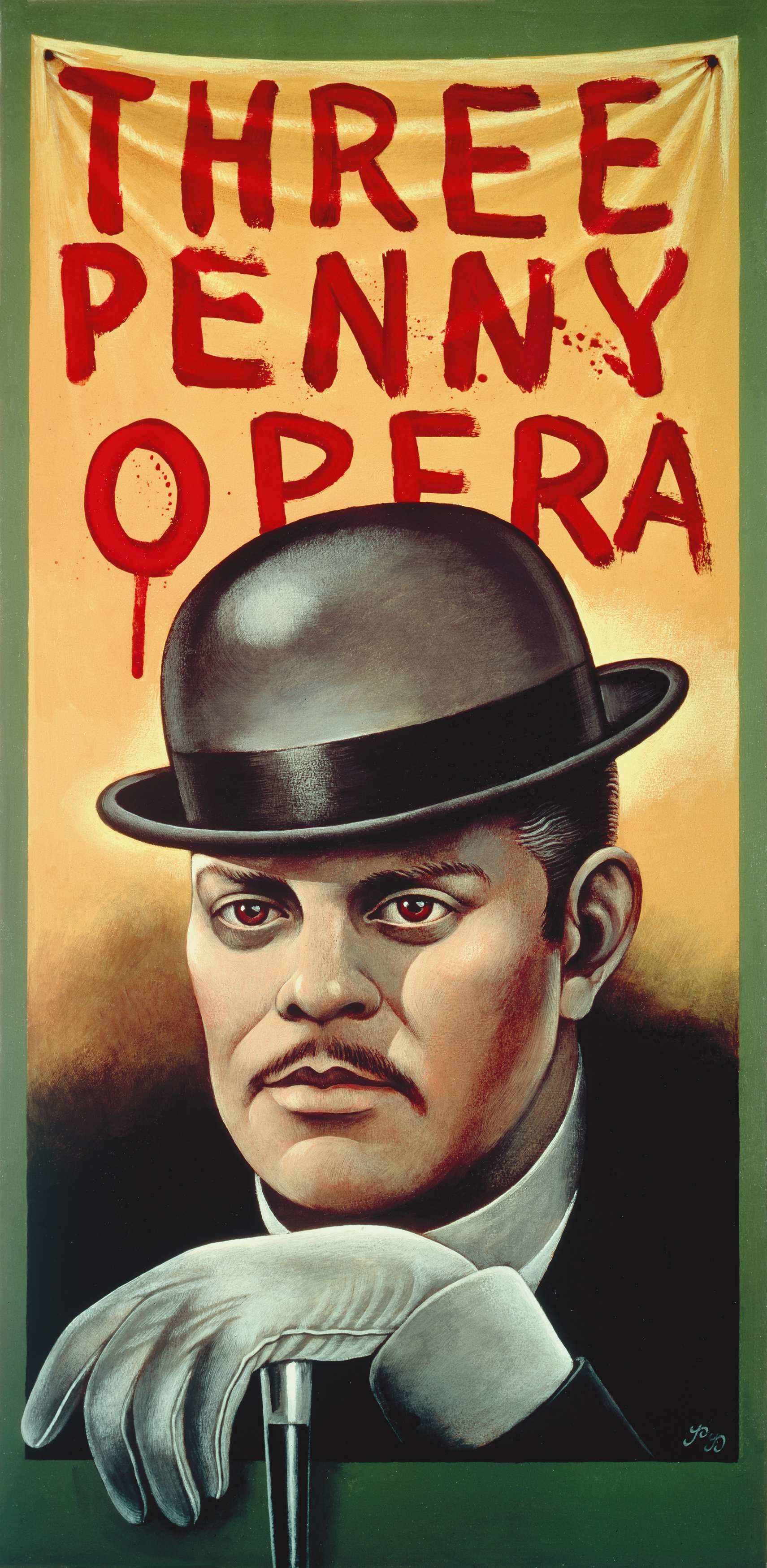
Everyone, even Chris Evans, is seemingly reading The Origins of Totalitarianism for its parallels to today’s political climate. And while many people are eager to put Trump into the role of master of the mob, fewer are interested in the parallels to both those who position themselves as the so-called Resistance, a broadly liberal movement with no political tenets except as a performative reaction towards Trump, and the incipient Left in the United States. The book is filled with few heroes for Arendt (she does seems to have a soft-spot for Dreyfusard Clemenceau), but she rarely is able to find figures who competently combat creeping fascism. Perhaps Arendt’s most vivid image of failure is Arendt’s description of an audience at a performance of the Brecht’s The Threepenny Opera as Germany is in the throes of pre-fascism. As Arendt describes it, Brecht’s work depicts “gangsters as respectable businessmen” and vice versa. This irony, which Brecht as a Marxist proponent of so-called dialectical theater almost certainly wanted to inspire his audience to revolutionary fervor or self-flagellation, actually served the opposite purpose. According to Arendt, “The mob applauded because it took the statement literally; the bourgeoisie applauded because it has been fooled by its own hypocrisy for so long that it had grown tired of the tension and found deep wisdom  in the expression of the banality by which it lived; the elite applauded because the unveiling of hypocrisy was such superior and wonderful fun. . . .  The only political result of Brecht’s revolution was to encourage everyone to discard the uncomfortable mask of hypocrisy and to accept openly the standards of the mob.” Here irony—even the knowing, well-informed, and thoughtful irony of Brecht—seems dangerous, even irresponsible. It is almost suggest as a weapon for the left so easily turned on itself as to be avoided. 

And yet Arendt herself sometimes uses irony as a device—her accounts of minority treaties as a method used to identify groups to expel in the name of identifying groups to protect. Arendt’s history is filled with these historical ironies, where Arendt (and her audience) can look at history and human folly through an ironic lens of retrospect. This historical irony is a safer, less malleable form of irony compared to Brecht’s contemporary. Why is the ironic mode of history acceptable while Brecht’s use tragic? Arendt tells us in The Human Condition, ““It is in the nature of beginning that something new is started which cannot be expected from whatever may have happened before. This character of startling unexpectedness is inherent in all beginnings … The fact that man is capable of action means that the unexpected can be expected from him, that he is able to perform what is infinitely improbable. And this again is possible only because each man is unique, so that with each birth something uniquely new comes into the world.” Brecht thinks he can know his audience, and this expectation of a single response to his play is the key flaw in his irony. He did not expect the unexpected, while Arendt’s historic irony is not undone as failure to recognize it as such.

The tension between these uses of irony helps the curious Arendt reader explore what irony is, and most specifically what irony requires. Why, if she was equally haunted by the eerie image of the avant-garde (used interchangeably with ‘the elites’ in this passage’) laughing at premonitions of their own undoing, did Arendt use irony?The answer could very well be in the structure of irony itself. Irony requires not only a specific audience but a shared worldview or knowledge between ironist and audience. Richard Rorty’s concept of vocabularies—language as the conceptual framework that does not simply help us discover but in fact creates truth and morality—helps elucidate the dynamics of irony. The ironist and her audience must have widely overlapping vocabularies. At its best, irony can be a moment of reaffirming an in-group. Arendt’s ironic moments make us accomplices in readers not only of Arendt but of history. A new intimacy can be felt by readers, even a sense of belonging. 

What makes the Brecht example a toxic moment is that it shows the harm of irony when vocabularies are coming into conflict or during a period of wildly shifting of vocabularies, during a crisis of legitimacy. When the mob, the bourgeoisie, and the elite heard “Erst commit das Fressen, dann commit die Moral,” they heard the same words, but their vocabularies (in the Rortian sense) imbued the phrase with very different meanings. Brecht thinks he knows his audience’s vocabularies; he does not. Irony doesn’t breakdown at these moments, but it becomes sinister. It renders the historical victors as knowing, and the losers as pathetic, almost silly. Arendt’s irony about historical events means that in some ways she can guarantee her audience shares a broad post-Naziism vocabulary, even decades later. 

Irony stops being constructive when it’s read by someone whose vocabulary strips it of its irony—instead of reading an ironic overstatement of fact with the ironist’s intentions, the overstatement is read in earnest, or as truth. An ironist misunderstanding or misidentifying her audience would create the harmful irony similar to the reception of Brecht in Pre-Hitler Germany. But moreover, in times when there is a great flux in norms, irony becomes a dangerous construction. Vocabularies are shifting wildly overnight, norms beloved by the elite are disappearing. In a Trumpian era, statements that five years ago would seem too ludicrous to be true “the US government is kidnapping children at the border” for instance, are suddenly actual statements of fact. These periods when fascism looms large are particularly unsuited for irony. Irony relies on a stable vocabulary and a stable realm of what is sincere and what is ironic. When we lose our collective vocabularies, the ironist loses control over the reception of their work. 

Irony happens to be a popular tool on the left at the moment, in ways that I would argue parallel the uncomfortable position Brecht found himself in. Since 2016 the “irony left” has been held in contrast with the “centrist left” (let’s forget that “irony” is not a coherent political position or that “centrist left” seems like a silly term when we have “left liberal” right here.) The extent to which these are manufactured divisions in the media and not clear political orientations cannot be overstated. This version of the political landscape has graced the pages of Paste Magazine, The Atlantic, and The New Yorker. The irony left finds it footing in podcasts (the most famous of which is Chapo Trap House)  and on Twitter (the mechanics of Twitter—the short phrases tweeted out without context, the ability to share these tweets sans context—actually makes it a very bad medium for irony). The irony left is not a particular political stance (although it hews fairly closely to a social democrat platform) but a group of relatively wealthy New Yorkers and the folks that love to laugh at their jokes.

But the pernicious results of this have always been clear in organizing spaces, where irony drains energy and can either confuse or even harm other organizers. In radical organizing spaces, people are ideally coming together to build new, liberatory vocabularies that help render their oppressors into problems to confront. When irony is used within organizing spaces, it creates an in-group (those who get irony) and an out-group. Irony in organizing spaces undercuts the work there.

Moreover, a recent piece on the style site The Cut profiled the hosts of Red Scare (take a moment to wow-whistle at the complete aestheticization of politics here), a podcast that the writer situates on the irony left. The hosts love to critique what they have dubbed “neoliberal feminism,” and that is seemingly enough to earn them a spot on the left. The podcast itself is a mixture of irony and cruelty—it is hard to know when, if ever, we should take its hosts seriously. But it is more concerning than simply handling slippery irony in the case of Red Scare. One of the hosts, Anna Khachiyan, has tweeted in 2015, “Let’s be clear on one thing: I am not and have never been a liberal or a leftist. I’m a cryptofascist, and the “crypto” is being generous.” And yet, The Cut has hailed this woman as a left alternative to Clintonite feminism. When irony becomes de rigeur on the left, it provides powerful cover for fascists to openly shift towards a socialized chauvinism and call it left. The hosts defend the use of the word “retarded” as an important part of their vocabulary, and I’d argue they share vocabularies more with reactionaries than with the left.

So where does that leave irony? I think it leaves Arendt’s own use of irony as fairly well insulated from the charges against contemporary ironists or Brecht. Her own use, versus Brecht’s, is ensconced in a strong reading of history, from a standpoint of decades later. Ironists today will probably be remembered in the best case scenario as a staging of The Three Penny Opera in pre-Hitler Germany—a revolutionary impulse thwarted by historical forces. At worst, ironists today will play a crucial role in undermining left power and bolstering fascism within the US. It is not because they intend to, but because they underestimate the power of the reader or listener. Regardless, these accounts show the limits of irony as a political weapon. It is a device of shared contingency, not one for a fractured and shifting political landscape.